Snapshot: Basic Information
| Field | Detail |
|---|---|
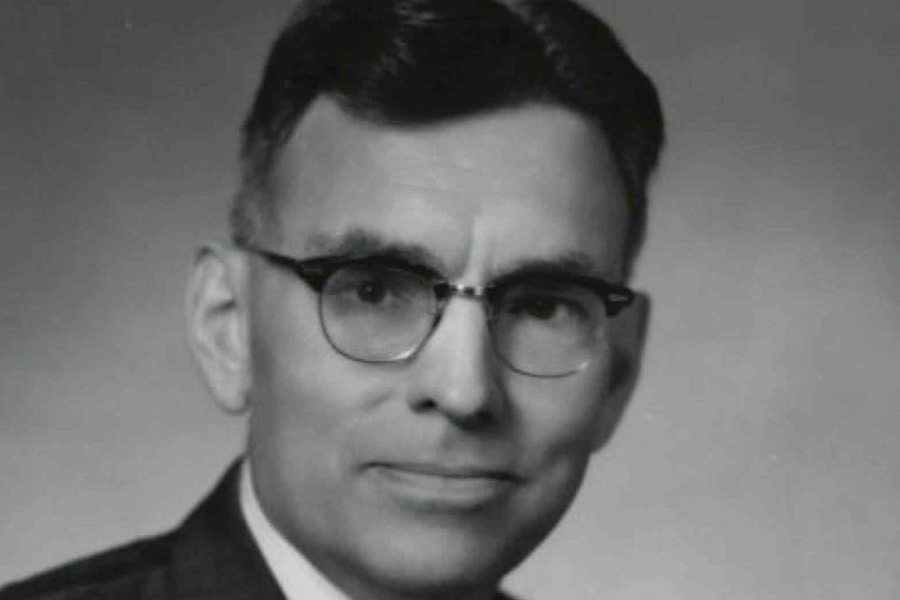
| Full name | Ernest Platt Buffett (commonly Ernest P. Buffett) |
| Birth | February 3, 1877 — Dix Hills, Suffolk County, New York |
| Death | September 22, 1946 — Omaha, Nebraska (age 69) |
| Occupation | Grocer, entrepreneur, cooperative founder, community leader |
| Active career | c. 1895–1946 (over 50 years associated with grocery trade) |
| Marriages | Henrietta Daisy Duvall (m. March 21, 1898; d. 1921); Belle Bailey (m. 1922) |
| Children (with Henrietta) | Clarence D., George, Howard Homan (b. Aug 13, 1903), Fred, Alice |
| Notable descendants | Howard H. Buffett (son; U.S. Congressman), Warren E. Buffett (grandson; b. 1930) |
| Residences of note | 1015 S 30th Street (1904–1933); later 671 N 57th Street |
| Burial | Prospect Hill Cemetery, Omaha |
| Civic roles | President, Omaha & Nebraska Retail Grocers Associations; Chamber of Commerce executive committee (1934–35); Rotary; Boy Scouts; Nebraska Humane Society president |
Early Life and Roots
Ernest P. Buffett arrived in the world on February 3, 1877, in Dix Hills, New York, but his life’s frame was drawn in the Midwest. The Buffett family relocated to Omaha while Ernest was still young, and by 1895—at age 18—he had completed his studies at Omaha High School and stepped immediately into the family trade: groceries. That early immersion was not a detour; it was destiny. From 1895 to roughly 1915 he learned every angle of the shop floor: inventory, ledger, customer relations, and the small economies that make a store hum.
Numbers anchor his biography. He began work in 1895. He married in 1898. In 1915 he expanded to Dundee. Those dates are not arbitrary; they mark transitions from apprentice to manager to owner.
Career and Innovations: The Business of Being Practical
There are two ways to build a store: with bold spectacle or steady craft. Ernest chose the latter. His signature business innovation was the establishment of a cooperative purchasing and advertising group commonly known as the “Buy-Rite” cooperative. That cooperative idea—pooling buying power to compete with larger chains—reads like a simple arithmetic trick, but in practice it required organization, trust, and leadership. It is an early 20th-century example of small operators using scale without losing independence.
Key career milestones in tabular form:
| Year | Milestone |
|---|---|
| 1895 | Joins “Buffett & Son” after high school |
| 1915 | Opens Dundee branch at 4901 Underwood Avenue |
| 1922 | Stores relocate to 4949 Underwood |
| 1920s–30s | Leads Nebraska Retail Grocers; founds Buy-Rite cooperative |
| 1934–35 | Member, Executive Committee — Omaha Chamber of Commerce |
| 1946 | Career ends with his death on September 22 |
He served as president of the Omaha Retail Grocers Association at different times (records vary between early 1900s and the 1920s) and held leadership roles that stretched from local to national trade gatherings. He made the grocer’s ledger into a cathedral of thrift: every dollar counted, every margin mattered.
Family, Household, and the Line of Influence
Ernest’s family life was both typical of its era and quietly consequential. He married Henrietta Daisy Duvall on March 21, 1898; the union produced five children between about 1899 and 1910: Clarence, George, Howard (born August 13, 1903), Fred, and Alice. Henrietta died in 1921. The next year Ernest married Belle Bailey and acquired a stepdaughter, Marjorie.
Household addresses map his upward mobility: from the family store to a Folk Victorian house at 1015 South 30th Street (occupied 1904–1933) and later to a home at 671 North 57th Street. Those homes—numbers and locations—tell a suburban migration story: stability, property ownership, steady income.
Howard Homan Buffett, Ernest’s son, went on to serve four terms in the U.S. House of Representatives. Howard’s children—most notably Warren Edward Buffett (born 1930)—would become the better-known lights of the family tree. Yet Ernest’s imprint is visible in small things: the insistence on saving a portion of every paycheck, the reverence for a practical lesson learned behind a counter, the quiet discipline that would later surface in Warren’s public pronouncements about thrift and value.
Financial Habits and Personal Traits
Ernest P. Buffett’s financial profile reads like a study in modest accumulation rather than spectacular wealth. He once observed that “there has never been a Buffett who ever left a very large estate, but there has never been one that did not leave something.” That sentence, delivered in 1939, is a compressed philosophy: save, but don’t hoard; persist, but don’t gamble.
Concrete characteristics:
- Conservative money management: saved portions of earnings consistently.
- Middle-class stability: owned homes; operated a business that lasted generations (store continued through 1969 under family stewardship).
- Community investment: donated time and leadership to civic organizations rather than gregarious philanthropy.
Ernest’s frugality functioned like a kiln—slow, steady, and capable of hardening values. He practiced thrift as a craft, and that craft was handed down.
Timeline: Dates, Places, and Turning Points
| Date | Event |
|---|---|
| 1877-02-03 | Born in Dix Hills, NY |
| 1886 | Death of his mother; family settles more firmly in Omaha |
| 1895 | Graduates Omaha High School; begins work in family grocery |
| 1898-03-21 | Marries Henrietta Daisy Duvall |
| 1904–1933 | Residence: 1015 South 30th Street, Omaha |
| 1915 | Opens Dundee grocery branch (4901 Underwood) |
| 1921 | Henrietta dies |
| 1922 | Marries Belle Bailey; store moves to 4949 Underwood |
| 1934–1935 | Chamber of Commerce executive committee member |
| 1939 | Public note on family thrift |
| 1946-09-22 | Dies in Omaha; buried at Prospect Hill Cemetery |
| 1969 | Family retail presence in Dundee ends (store closes under family ownership) |
Each date is a hinge. Open one and the next swings.
Residences, Community Roles, and Civic Footprint
Ernest was not merely a shopkeeper behind a counter. He chaired Boy Scout camp properties, served in Rotary, and held a presidency in the Nebraska Humane Society. His civic life was proportionate to his commercial life: organized, purposeful, community-facing. The Dundee store he opened in 1915 and the relocation in 1922 were not only business decisions; they were neighborhood commitments. The store’s presence for more than five decades—across three generations of Buffetts—was a kind of local infrastructure, like a lamp post that burns quietly for years.
Anecdotes and Family Color
A few small stories illuminate character. Warren Buffett worked in the family store as a teenager; Charlie Munger, later Warren’s partner, also spent time around the operation. These childhood and teenage encounters are the roots of a larger tree. The family’s Huguenot ancestry, stretching to early American settlements and a 17th-century immigrant named John Buffett, provided a historical narrative that emphasized endurance and adaptation.
The unfinished manuscript attributed to Ernest, with a practical title such as How to Run a Grocery Store and a Few Things I Have Learned About Fishing, captures his voice: hands-on wisdom mixed with leisure-time reflection. It is both handbook and parable.
Names, Numbers, and the Quiet Architecture of a Life
Numbers return at the end as proof: five children; two marriages; more than 50 years in the grocery trade; key addresses (1015 S 30th; 4901 and 4949 Underwood); dates from 1877 to 1946. These are the scaffolding of a life that mattered not for headlines but for habit. Like a well-tended ledger, Ernest P. Buffett’s life records small, steady entries: saving a bit, selling a pound, leading a cooperative, showing up for the Rotary meeting. The cumulative total is not sudden wealth. It is, instead, an inheritance of practice—discipline that traveled down the family line and found new forms in politics, philanthropy, and investment.