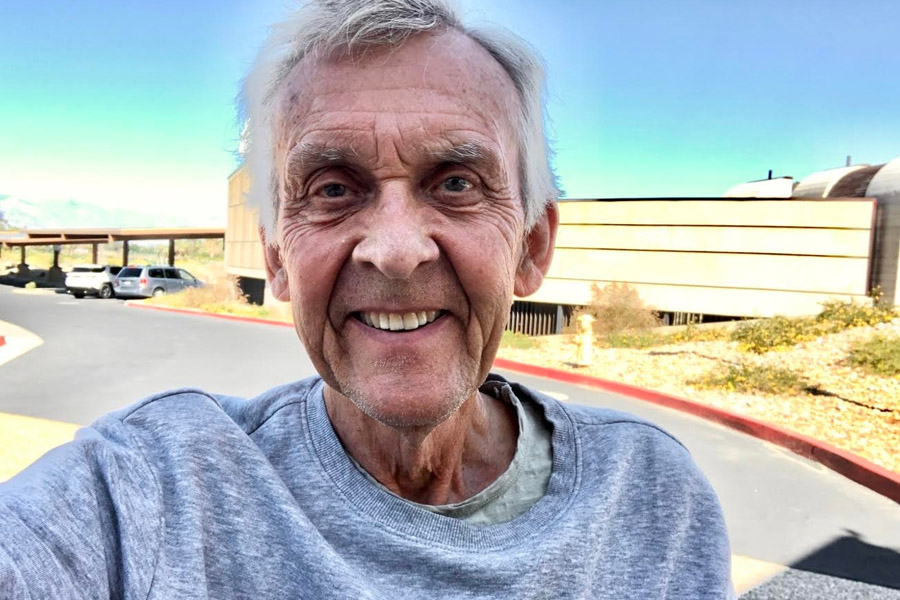
A personal introduction
I first came across Rupert Macnee when I started tracing the threads of a family that has quietly threaded itself through 20th century screen history. He is not a household name like his father, but his life reads like a backstage pass. Born on March 5, 1947, he moved from English boarding schools to Princeton University and then into a career that mixed documentary work, television production, and, later in life, art. I write about him not to dramatize, but to map a steady career and an intimate family story. Think of it as a ledger of public life, sketched with the private flourishes that appear in interviews and local profiles.
Family at the center
The central theme of Rupert’s narrative is family. He is the son of Patrick Macnee, who was born in 1922 and passed away in 2015. Macnee gained notoriety for his role as John Steed in the television series The Avengers. Patrick had the same impact as a set piece. The mother of Rupert is Barbara Douglas. Jenny Macnee is his sister. The theater and more sedate family life coexisted in their home. Dorothea Mary Henry, formerly known as Dorothea M. Macnee in earlier records, is the ancestor of the family name on the paternal side. Instead of being a headline, each member of the family is a figure in Rupert’s orbit.
The family strikes a balance between their private lives and public occupations, which I think is important. From the 1960s onward, Patrick took center stage, while Rupert worked behind the camera and then as an illustrator. Local histories and property records sporadically mention Jenny and other family members. In a well-traveled garden path, the public traces resemble footprints.
Education and early formative years
Rupert’s early trajectory was shaped by specific institutions and dates. He attended Bedford School for his secondary education. He matriculated at Princeton University and is associated with the Class of 1969. Those years matter because they planted his early interest in film and public affairs. He won a small but meaningful Ford Foundation grant at Princeton to develop film courses. That combination of policy and picture seems to have set his course.
Career in film and television
Rupert’s work lies in the nexus of entertainment, health education, and documentary production. He conducted research for CTV in Canada in his early career. He alternated between documentaries and syndicated television during the 1970s and 1980s. Producing health education videos and a diabetes documentary in 1989 that attracted an exceptionally large audience for its genre are highlights. Through a national organization, the movie’s distribution numbers surpassed 1,000,000 units—a figure that is not to be taken lightly.
He has made contributions to variety shows and comedic programming. His resume grew to include executive positions at public television affiliates, line producing, and DVD special features in the 1980s and 1990s. Rupert consistently converted content into easily accessible media, and this tendency is evident. He used function rather than hype to build audiences. Although he collaborated with well-known people and networks, he didn’t aim for the spotlight.
Art and later life reinvention
In the last decade the story becomes visual in another sense. Rupert digitized decades of drawings and began to present his illustrative work publicly on a personal website. The transition reads to me like an artist returning to a first love. Film and television taught him the grammar of visual storytelling. Drawing allowed him to speak in a quieter voice. I see this as a late career bloom; many creatives find fresh channels after 50 or 60 years of work. In Rupert’s case the pivot produced an active online presence and local art engagements.
Finance and public records snapshot
I kept my focus to public, noninvasive facts. There are property transaction records that list Rupert alongside his sister Jenny as parties to a sale. There are no public SEC or corporate exec filings that produce a formal net worth figure. Document distribution metrics and production credits provide a clearer sense of professional scale than any speculative tally. When a project reaches more than 1,200,000 distributed units it tells you something about reach. When a family member appears on multiple public filings the public record is simply doing its job.
Timeline of select dates and milestones
| Year | Event |
|---|---|
| 1947 | Rupert Macnee born on March 5 |
| 1960s | Attended Bedford School; entered Princeton University |
| 1969 | Associated with Princeton Class of 1969 |
| 1970s | Early television and documentary work; CTV researcher roles |
| 1987 | Produced American Video Awards event related work |
| 1989 | Co produced a diabetes documentary with distribution above 1,000,000 units |
| 1990s | Line producing and executive roles with public television and cable projects |
| 2007 | Moves related to family caregiving noted in local accounts |
| 2015 | Patrick Macnee dies on June 25 |
| 2019 2024 | Digitization of drawings and renewed art presence; published contributions to contemporary books in 2024 |
The timeline is not exhaustive. It tracks the arc I could assemble from public material. The years bracket a life that moves through institutions, media, and finally to hand drawn images on a screen.
The family dynamic in practice
Family, for Rupert, has meant practical caregiving as much as legacy. There are accounts of relocations to assist with elderly care and instances where siblings managed shared property responsibilities. These moments are small and human. They are the plumbing of a public life. I find them the most revealing. They show obligations and affections that do not appear on a credits page.
FAQ
Who is Rupert Macnee in relation to Patrick Macnee
Rupert is the son of Patrick Macnee. Patrick lived from 1922 to 2015 and is best known for portraying John Steed on the television series The Avengers. Rupert spent time helping his father in later years and appears as a family representative in public notices about Patrick.
Does Rupert have siblings
Yes. Jenny Macnee is his sister. Public records and family notices reference the two siblings together in property and caregiving contexts.
What is Rupert Macnee known for professionally
He is known for documentary production, health education films, television line producing, and later for his work as an illustrator. Notable among his projects is a diabetes education film from 1989 that reached over 1,000,000 people via organized distribution.
What formal education did Rupert complete
He attended Bedford School and then Princeton University, where he is associated with the Class of 1969 and worked on student film projects and a film course funded by a Ford Foundation grant.
Are there recent public activities by Rupert
Yes. In recent years he digitized long running sketchbooks and published his drawings online. He contributed written material to a book published in 2024 and remains active in local cultural life.
Is there public financial information about Rupert
There are property sale records that include his name and distribution figures related to his film work. There are no public filings that lay out a formal net worth figure.
Who are other relatives mentioned in public records
On the paternal side the name Dorothea Mary Henry is recorded in older family accounts as a familial ancestor. Other extended family names appear sporadically in obituaries and local notices, but the central public figures remain Patrick, Barbara, Rupert, and Jenny.