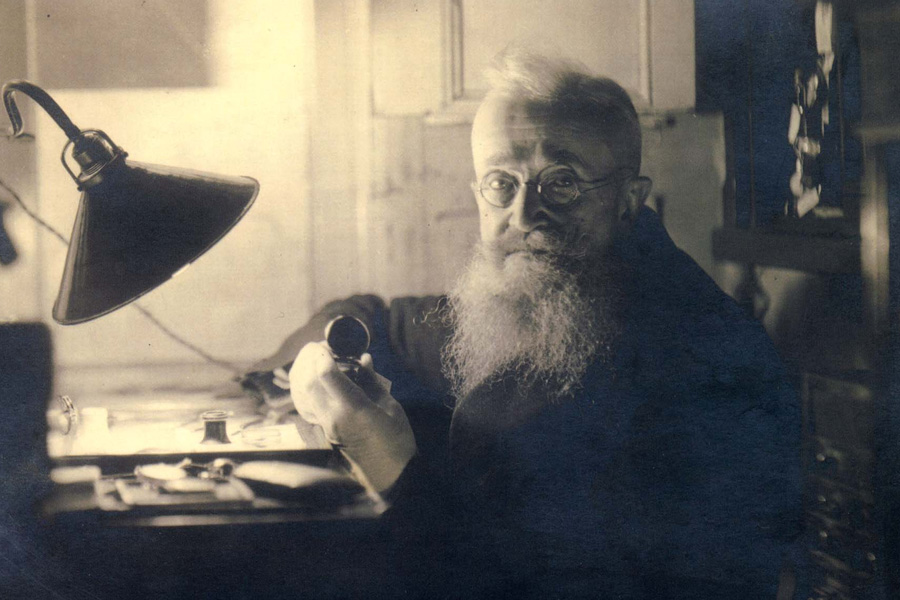
Discovering a Hero in Ticking Shadows
I first stumbled upon Casper Ten Boom’s story during a late-night scroll through old family histories, drawn in by the quiet rhythm of a life that mirrored the precise gears of the watches he repaired. Born on May 18, 1859, in the canal-laced city of Haarlem, Netherlands, Casper embodied the steady pulse of ordinary heroism. A watchmaker by trade, he inherited not just tools from his father, Willem, but a deeper legacy: nightly prayers for the Jewish people, a tradition sparked in 1844 that would span a century and over 5,200 gatherings. Those prayers were no mere habit. They wove through his days like invisible threads, binding his family to a moral compass that pointed true north even as storm clouds of war gathered.
Casper’s world revolved around the family shop at Barteljorisstraat 19, where the air hummed with the soft click of springs and the murmur of Scripture. He apprenticed young, around 1875, mastering the art of timekeeping that demanded patience and precision. By 1877, at just 18, he struck out to Amsterdam, opening a jewelry store that tested his mettle before he returned to Haarlem in the 1880s to claim his father’s business. There, amid polished cases of clocks and chains, he built a life of modest prosperity. Financially, the shop sustained them comfortably, enough to expand the home above it and fund quiet charities, yet Casper hoarded no wealth. He poured resources into the poor, founding Tot Heil des Volks in the early 1900s, a ministry that fed bodies and souls in Haarlem’s shadowed alleys.
But it was faith that fueled him, a blaze kindled in the Dutch Reformed Church. Casper saw Jews not as distant figures from the Bible, but as kin under God’s gaze. When Nazis stormed the Netherlands in May 1940, he didn’t flinch. Instead, he opened his home, the Beje, as a sanctuary. By 1942, the first Jewish woman found refuge there. Soon, hidden rooms concealed dozens, ration cards forged in secret, lives balanced on the edge of discovery. Over 800 souls owed their survival to the Ten Booms’ network. Arrested on February 28, 1944, at 84, Casper faced Gestapo interrogators with words that cut sharper than any blade: “You say we could lose our lives for this child. I would consider that the greatest honor.” Nine days later, on March 9, he slipped away in a Hague hospital, his heart giving out like an overwound spring. His burial in the dunes gave way to reinterment at Loosduinen, a final tick in a life that outlasted tyranny.
The Family Web: Threads of Love and Loss
What captivates me most about Casper is how his spirit echoed in his family, a web of siblings and children who turned personal hearths into bastions of defiance. Marriage came in 1884, when he wed Cornelia Johanna Arnolda Luitingh, a vibrant Sunday school teacher whose laughter filled their home like sunlight on water. They raised four surviving children amid joys and heartaches, their quarters above the shop a cozy chaos of ticking timepieces and whispered devotions. Cornelia’s death in 1921 from a stroke at 64 left a void, but Casper, ever the patriarch, steered them forward, his grief transmuted into fiercer tenderness.
To map this intricate lineage, I sketched a simple table of the core family, dates anchoring the fleeting moments that shaped them.
| Family Member | Relation to Casper | Birth-Death Dates | Key Role in Legacy |
|---|---|---|---|
| Willem ten Boom | Father | 1837-1916 | Watchmaker who founded the Haarlem shop in 1837; initiated prayer meetings in 1844. |
| Elisabeth ten Boom (née Bell) | Mother | Mid-1800s | Supportive homemaker; raised six children in faith’s quiet forge. |
| Cornelia Johanna Arnolda Luitingh | Wife | 1857-1921 | Joyful partner; hosted family “occasions” that celebrated every breath as gift. |
| Elisabeth “Betsie” ten Boom | Daughter | 1885-1944 | Eldest; household anchor, frail yet unbreakable; hid Jews and forgave captors in Ravensbrück. |
| Willem “Wim” ten Boom | Son | 1886-1946 | Minister; pastored in Amsterdam; sheltered refugees in his nursing home until war’s toll claimed him. |
| Hendrik Jan ten Boom | Son | 1888-1889 | Brief light; died at six months, teaching the family early lessons in heaven’s nearness. |
| Arnolda Johanna “Nollie” ten Boom (van Woerden) | Daughter | 1890-1953 | Teacher; married Flip van Woerden in 1920; mother of six, including a son executed in 1944. |
| Cornelia Arnolda Johanna “Corrie” ten Boom | Daughter | 1892-1983 | Youngest; licensed watchmaker in 1924; survived Ravensbrück to share their story worldwide for 33 years. |
| Peter “Kik” ten Boom | Grandson (Wim’s son) | 1923-1944 | Resistance fighter; arrested young, executed at 21, his courage a spark in the family’s fire. |
Betsie, the oldest daughter, was Casper’s soft echo, her body handicapped by illness since childhood but her resolve strong. Unmarried, she ran the Beje from 1921, sheltering over 50 orphans by 1918 and becoming a beacon of hope. Betsie smuggled Bible sheets and conceived forgiveness for her guards in Ravensbrück, where she died on December 16, 1944. Her sister was plagued and healed.
Preacher son Wim kept the family’s intellectual flame. He led an Amsterdam Dutch Reformed Church congregation and married Tine van Veen in the early 1900s, having four children. His nursing home was a hideout during the occupation, but his 1944 arrest broke him slowly. He lived until 1946, dying in that postwar shadow of camp privations.
Nollie, the lively teacher, married Flip van Woerden, a fellow resister, and had six children in their underground safehouse. Her honesty disclosed a hiding area, piercing it like a lost gear, but she redeemed it via tireless aid. Though briefly arrested, she survived the conflict until 1953.
Casper’s shop and soul passed to Corrie, the youngest. Her 1924 certification as the Netherlands’ first female watchmaker allowed her to run disadvantaged youth programs before the war. She and Betsie created the Beje’s 1943 secret room, a fake wall that hid six. In late 1944, Ravensbrück’s paperwork error spared her days before a mass execution. After traveling to 60 countries, her 1971 book The Hiding Place immortalized their story globally until her 1983 death.
Hendrik Jan’s whooping cough in 1889 was a cruel thief at six months, but his memory inspired Casper’s “ticket to heaven” narrative, promising Corrie grace on time. Kik, Wim’s son, was arrested at 20 for resisting, and his 1944 execution ended their prayers and a young life.
Echoes of Resistance: A Home Turned Fortress
The Beje wasn’t just bricks and mortar; it pulsed like a hidden heart, beating against the Nazi vise. From 1940, as yellow stars branded Jewish neighbors, Casper pinned one to his coat in solidarity, his words a shield: “If I die in prison, it will be for God’s ancient people.” The family forged papers, rationed food for the hidden, and linked with broader networks, their efforts a clandestine symphony saving hundreds.
I imagine the tension in those rooms, clocks ticking louder as footsteps echoed outside. Betsie baked bread for refugees, Corrie tinkered with radios for coded messages, Nollie taught covert lessons to wide-eyed children. Wim’s sermons, smuggled in whispers, reminded them: faith wasn’t passive, but a forge for action. Losses mounted, Tine dying in 1944 alongside Kik, yet they pressed on, their unity a bulwark against despair.
Postwar, the survivors rebuilt. Corrie sold heirlooms to fund travels, turning personal scars into global beacons. The prayer chain, unbroken from 1844 to 1944, inspired revivals, a century’s vigil against hatred. In 2008, Yad Vashem etched their names among the Righteous, a quiet medal for lives poured out like oil on troubled waters.
Wartime Whispers: Daily Defiance
Each day in the Beje blended routine with risk, a dance on knife’s edge. Mornings began with devotions, Casper’s voice steady as he read Psalms. Afternoons hummed with repairs, customers oblivious to the attic’s secrets. Evenings brought the hidden down for meals, laughter muffled, stories shared in hushed tones. Numbers tell the tale: over 800 rescued, countless ration cards issued, a hidden room built in 1943 holding six for 48 hours at a stretch during raids.
Casper’s charity extended prewar, fostering orphans from 1918, their grateful eyes mirrors of the Jews he’d later shield. Financially, the shop’s steady flow, perhaps 500 repairs yearly, funded it all, no extravagance spared. His life taught me this: true wealth accrues in unseen ledgers, tallied in lives touched.
FAQ
Who were Casper Ten Boom’s children?
Casper and Cornelia raised four children who survived infancy: Betsie, born in 1885, the devoted homemaker; Wim in 1886, the scholarly minister; Nollie in 1890, the bold teacher; and Corrie in 1892, the trailblazing watchmaker and storyteller. Each wove their thread into the family’s tapestry of resistance and faith.
What role did the Ten Boom family play during World War II?
From 1940 onward, they transformed their Haarlem home into a refuge, hiding Jews and resisters in concealed spaces, forging documents, and coordinating with the Dutch underground. Their efforts saved over 800 lives, culminating in arrests in 1944 and internment in camps like Ravensbrück, where faith became their unyielding anchor.
How did Casper Ten Boom’s faith influence his family?
Casper’s daily prayers for Jerusalem, started by his father in 1844, instilled a profound philo-Semitism, viewing aid to Jews as divine mandate. This conviction rippled through generations, turning personal piety into collective action, with over 5,200 sessions binding them in purpose amid peril.
What happened to the Ten Boom family after the war?
Survivors like Corrie emerged scarred but resolute. She traveled for 33 years, sharing forgiveness’s power until 1983. Nollie rebuilt her family until 1953, while Wim succumbed in 1946 to war’s echoes. Their legacy endures in museums and memories, a testament to resilience’s quiet roar.
Why is the Ten Boom story still relevant today?
In an era of rising shadows, their tale of ordinary people choosing extraordinary mercy reminds us that courage hides in everyday choices. Casper’s solidarity, wearing the Star of David in 1942, challenges us to stand firm, one hidden life at a time.