Early Life Amidst Hollywood’s Golden Glow
I often wonder how a child born into the dazzling whirlwind of 1930s Hollywood could choose a path so removed from the spotlight. Irving Thalberg Jr., born on August 25, 1930, in Los Angeles, California, entered the world as the son of two titans. His father, Irving Thalberg, was the legendary MGM producer, a visionary who reshaped cinema with innovations like story conferences and audience previews before his untimely death at 37. His mother, Norma Shearer, shone as an Academy Award-winning actress, embodying the era’s glamour in films that pushed boundaries.
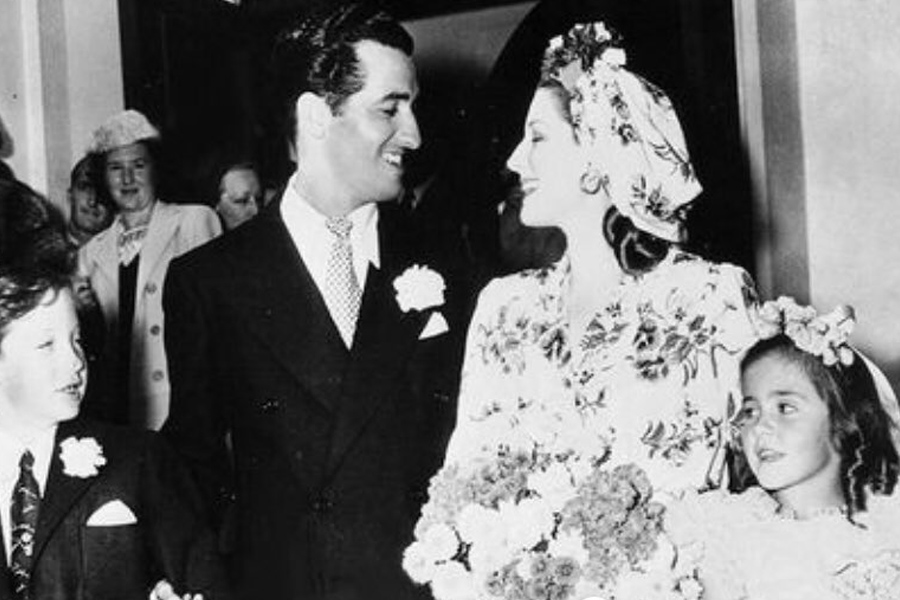
Growing up in a sprawling French provincial home in Santa Monica, young Irving experienced privilege that few could imagine. Ocean views framed his days. Stars like Greta Garbo and Clark Gable wandered through family gatherings. Yet, tragedy struck early. On September 14, 1936, his father succumbed to lobar pneumonia, leaving a six-year-old boy to grapple with loss. This void, like a sudden eclipse over a sunlit stage, shifted the family’s dynamics. Norma remarried in 1942 to ski instructor Martin Arrouge, introducing new influences. I see in this a pivotal turn, steering Irving Jr. toward introspection rather than performance.
Education became his anchor. He attended the elite Institut Le Rosey in Switzerland, a boarding school for global elites, fostering a worldview beyond Tinseltown’s illusions. Back in the U.S., Stanford University called. He earned his bachelor’s degree there, then a Ph.D. in philosophy in 1960. These years molded him into a thinker, drawn to action theory, the philosophy of mind, and emotions. It’s as if he traded his father’s script revisions for dissecting human intentions.
Family Ties: A Web of Relations and Influences
Family for Irving Thalberg Jr. was a tapestry woven with fame, privacy, and quiet bonds. His parents set the foundation: Irving Thalberg (1899-1936), the “Boy Wonder” who produced over 400 films, and Norma Shearer (1902-1983), who starred in 60 movies and won an Oscar for “The Divorcee” in 1930. They married in 1927, blending ambition with affection.
His sibling, Katharine Thalberg, born in 1935, shared this heritage but carved her own niche. She passed in 2006 at 70, having owned Explore Booksellers in Aspen, Colorado, a cultural hub that echoed her love for literature over film. Katharine’s life in Aspen, away from Los Angeles, mirrored her brother’s retreat from celebrity. They were close, siblings navigating the shadow of parental legends.
Irving Jr.’s personal relationships added depth. He married Suzanne McCormick on August 21, 1956, in Reno, Nevada, at age 25. Together, they raised three daughters: Deborah Thalberg, Shoshana Thalberg, and Elana Thalberg. Deborah pursued paths possibly in anthropology or related fields, though details remain private. Shoshana and Elana, similarly guarded, reflect the family’s emphasis on discretion. After divorcing Suzanne-the exact date eludes public records-he wed anthropologist Deborah Pellow. She provided companionship in his later years, sharing intellectual pursuits until his death.
Extended family branched out. Grandparents included Edith Shearer, Norma’s mother, linking to a lineage of resilience. Cousins formed a network: Barbara Hawks, with ties to film; Peter John Ward Hawks; Stephen Shearer; David Hawks; Peter Hawks; and Mark Shearer. These relations, stemming from Shearer’s side, often appeared in genealogical notes, hinting at gatherings filled with stories of old Hollywood. I picture them as distant stars in a constellation, each orbiting the central legacy of Irving Thalberg Sr.
To visualize this intricate family structure, here’s a simplified table of key members and their roles:
| Family Member | Relation to Irving Jr. | Birth-Death Years | Notable Details |
|---|---|---|---|
| Irving Thalberg | Father | 1899-1936 | MGM producer, revolutionized film production |
| Norma Shearer | Mother | 1902-1983 | Oscar-winning actress, starred in 60 films |
| Katharine Thalberg | Sister | 1935-2006 | Owned bookstore in Aspen, cultural enthusiast |
| Suzanne McCormick | First Wife | N/A | Mother of three daughters, married 1956 |
| Deborah Pellow | Second Wife | N/A | Anthropologist, supported him in illness |
| Deborah Thalberg | Daughter | N/A | Pursued intellectual fields |
| Shoshana Thalberg | Daughter | N/A | Maintained privacy |
| Elana Thalberg | Daughter | N/A | Similarly private life |
| Barbara Hawks | Cousin | N/A | Film-related connections |
| Peter John Ward Hawks | Cousin | N/A | Extended family branch |
| Stephen Shearer | Cousin | N/A | Part of Shearer lineage |
| David Hawks | Cousin | N/A | Hollywood ties |
| Peter Hawks | Cousin | N/A | Family network |
| Mark Shearer | Cousin | N/A | Genealogical link |
| Edith Shearer | Grandmother | N/A | Norma’s mother, family matriarch |
This table captures the essence. Numbers like 60 films for Norma or 400 for Irving Sr. underscore the scale of their influence, contrasting with Jr.’s more measured life.
Academic Journey and Philosophical Contributions
Irving Jr.’s career intrigues me. He taught at Oberlin from 1960-1963. 1964 brought a University of Washington visiting professorship. He became a full professor at the University of Illinois at Chicago by 1965. He shaped brains there for decades.
His works are pillars. His 1972 book “Enigmas of Agency: Studies in the Philosophy of Human Action” examined free will and intentions, like his father’s film choices but in abstract terms. “Perception, Emotion and Action” examined sensory and behavioral experiences in 1977. “Misconceptions of Mind and Behavior,” from 1983, critiqued mental fallacies. These books and articles were lauded. His peers like Ruth Marcus praised his diligence and empathy.
With a $100,000 trust fund from his father’s inheritance, he focused on ideas, not income. This great inheritance freed him from Hollywood’s pressures. I imagine a peaceful stream diverging from a raging river and finding its own path.
Later health issues plagued him. He battled cancer until August 21, 1987, dying at 56 in Aspen, Colorado. He was buried quietly, leaving academia and family mourning.
Timeline of a Thoughtful Life
To grasp the rhythm, consider this extended timeline. It maps key moments, blending personal and professional milestones.
| Year | Event Description |
|---|---|
| 1930 | Born August 25 in Los Angeles to Irving Thalberg and Norma Shearer. |
| 1935 | Sister Katharine born, expanding the family. |
| 1936 | Father dies September 14 from pneumonia, altering childhood. |
| 1942 | Mother remarries Martin Arrouge. |
| 1950s | Attends Stanford, earns bachelor’s degree. |
| 1956 | Marries Suzanne McCormick August 21 in Reno. |
| 1960 | Completes Ph.D. at Stanford; starts at Oberlin College. |
| 1963 | Leaves Oberlin. |
| 1964 | Visiting professor at University of Washington. |
| 1965 | Joins University of Illinois at Chicago. |
| 1972 | Publishes “Enigmas of Agency.” |
| 1977 | Releases “Perception, Emotion and Action.” |
| 1983 | Publishes “Misconceptions of Mind and Behavior.” |
| 1987 | Dies August 21 in Aspen from cancer at age 56. |
This chronology reveals a steady ascent, punctuated by losses and achievements. Dates like 1972 and 1983 highlight his productive peaks.
Recent Echoes and Cultural Impact
Even decades later, Irving Jr.’s story resurfaces. In 2025, family photos with Norma sparked online discussions. Blogs and forums revisit his disdain for Hollywood tributes, like the 1987 Academy Awards event he dismissed. YouTube videos on Shearer’s children portray him as academia’s quiet rebel. His legacy lingers in philosophical debates on agency, influencing how we understand decisions.
I find it striking how he embodied contrast. Born to creators of illusions, he pursued truths of the mind. His family, a blend of public icons and private souls, amplified this duality.
FAQ
Who were Irving Thalberg Jr.’s parents and what made them famous?
Irving Thalberg Jr.’s parents were Irving Thalberg and Norma Shearer. His father revolutionized MGM with over 400 films produced by age 37. Norma, an actress in 60 movies, won an Oscar in 1930 for her bold roles.
What was Irving Thalberg Jr.’s career focus and key achievements?
He focused on philosophy, teaching at the University of Illinois at Chicago from 1965. Achievements include three books: “Enigmas of Agency” in 1972, “Perception, Emotion and Action” in 1977, and “Misconceptions of Mind and Behavior” in 1983. He explored human action and mind with acclaimed depth.
How many children did Irving Thalberg Jr. have, and who were they?
He had three daughters with Suzanne McCormick: Deborah, Shoshana, and Elana Thalberg. They maintained private lives, with Deborah possibly in intellectual fields.
What was the relationship like between Irving Thalberg Jr. and his sister Katharine?
They shared a close bond, both distancing from Hollywood. Katharine, born 1935 and died 2006, ran a bookstore in Aspen, reflecting cultural interests similar to his academic pursuits.
When and how did Irving Thalberg Jr. pass away?
He died on August 21, 1987, at 56 from cancer in Aspen, Colorado. His burial was private, aligning with his preference for discretion.
Who were some of Irving Thalberg Jr.’s extended family members?
Cousins included Barbara Hawks, Peter John Ward Hawks, Stephen Shearer, David Hawks, Peter Hawks, and Mark Shearer, connected through Norma’s lineage with varying Hollywood ties.
What education did Irving Thalberg Jr. receive?
He attended Institut Le Rosey in Switzerland, then Stanford University for his bachelor’s and Ph.D. in philosophy, completed in 1960.