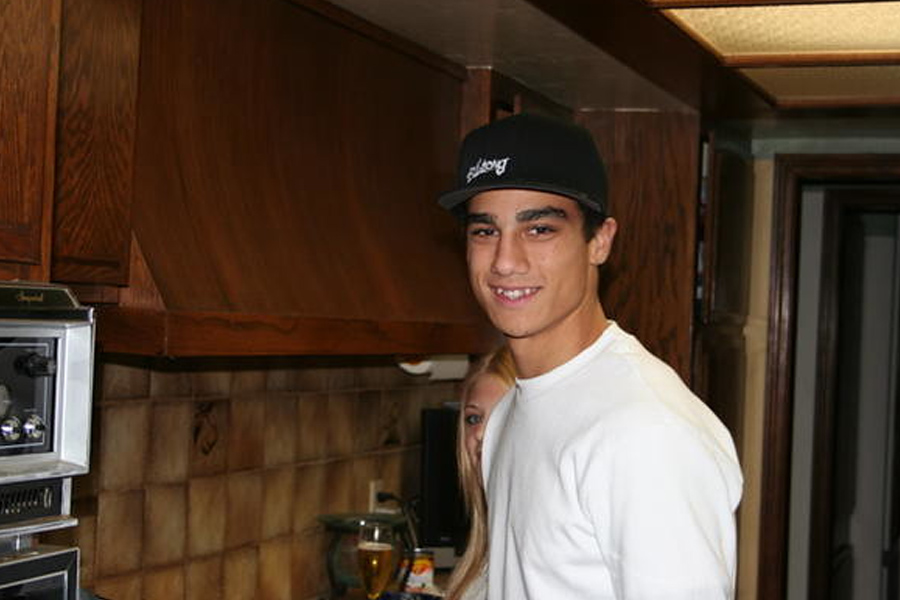
A quick portrait
| Field | Detail |
|---|---|
| Name | Keli I Chock (credited also as Keliʻi “Moe” Chock) |
| Public role | Villalobos Rescue Center team member; recurring cast on Pit Bulls & Parolees |
| Family / household | Adopted son of Tia Maria Torres; twin brother Kanani Chock; spouse/partner Lizzy Chock; household members include Mariah “M2” Chock and other Torres/Chock family members |
| Place of origin | Hawaiian by birth |
| Education / youth | Attended Vasquez High School; participated in high-school basketball |
| Primary activities | Animal rescue, on-camera work, caretaking at Villalobos |
| Public financial profile | No authoritative public record of personal net worth or separate corporate roles |
| Public visibility | Recurring presence on multi-season reality television and social media/fan channels |
The household that became a rescue
Keli I Chock’s public identity is braided tightly with Villalobos Rescue Center and the larger Torres/Chock household that viewers met on Pit Bulls & Parolees. The family operates like an engine with many moving pistons: Tia Maria Torres as the steady heart, and a cast of grown children, adopted kids, and helpers who keep the rescue running day to day. Keli — often seen beside his twin, Kanani — is one of those steady hands. He is not a lone star but part of a constellation: a member of a working family whose work happens to be filmed for television.
That dynamic shapes how Keli is presented in public life. He is visible when the camera rolls, visible when dogs are rehabilitated and loaded into transport vans, visible when the household tackles the practical, messy, and often urgent tasks of running a nonprofit rescue. The story that audiences watch is part domestic, part social enterprise, part soap opera; the people who live it are both cast and crew. Keli’s role in that mix is practical and relational: caregiver, handler, son, husband, twin.
Family ties and daily weather
| Relationship | Role / public note |
|---|---|
| Tia Maria Torres | Adoptive mother; founder of Villalobos Rescue Center |
| Kanani Chock | Identical twin brother; frequent co-worker and on-screen counterpart |
| Lizzy (Lizzie) Chock | Wife / partner; appears in household and rescue contexts |
| Mariah “M2” Chock | Household member; younger-generation presence in the rescue |
| Siblings / extended | Other Torres family members and adopted children participate in rescue life |
Family scenes on the show read like weather reports for the household: sudden storms (an emergency intake, an injured animal), long stretches of calm labor (cleaning, feeding, training), brief flashes of sunlight (adoptions and recoveries). Keli moves through that weather with the low-key competence you see in people who learned early to make do and to care without theatricality.
A practical resume: rescue, TV, and early life
If you stacked Keli’s public activities as entries on a minimalist resume, the list would look compact but meaningful:
- Hands-on animal rescue and caregiving at Villalobos Rescue Center.
- Recurring cast member on Pit Bulls & Parolees across multiple seasons.
- Early life and youth activities include attending Vasquez High School and playing basketball there.
Numbers and tidy achievements are not the headline here. The work is measured in dogs rehabilitated, kennels cleaned, transports completed, and shifts worked — metrics that rarely translate into neat awards or corporate titles. That lends Keli’s public image the grainy texture of reality work: large on labor, small on public accolades. Public records and streaming cast lists place him consistently in the household roster; beyond that, there are few reports of separate business ventures, formal awards, or a disclosed financial portfolio.
Timeline of public touchpoints
| Period | Public touchpoint |
|---|---|
| Childhood | Born in Hawaii; adopted into the Torres household and raised as part of the Villalobos family |
| High school years | Attended Vasquez High School; participation in basketball recorded in school stats |
| 2000s–2010s | Began appearing regularly at the rescue; early seasons of Pit Bulls & Parolees featured household life |
| 2010s–2020s | Continued on-camera presence, rescue work, and occasional social media/fan attention; family-centered updates and YouTube pieces appear periodically |
These date ranges sketch a life that grew from family rescue work into televised visibility. The timeline is less about a sequence of promotions and more about continuity: the same household, the same rescue mission, viewed year after year through the evolving lens of cable and streaming platforms.
On camera and off: what the public sees
Television compresses complexity into scenes and sound bites. Viewers see Keli helping with dogs, being part of family arguments or celebrations, and sometimes standing on the edge of the drama when crises arise. Off camera, the contours of his life are quieter: household routines, the physical labor of care, and private family relationships. Public interest often magnifies moments — injuries, rescues, departures, reunions — but the day-to-day is the deeper substrate.
The way Keli and Kanani are presented together adds a twin narrative to the family story. Twins carry their own shorthand in storytelling: doubled faces, shared histories, and the easy shorthand of someone who knows you without preface. That twin bond is a recurring visual and relational motif in the Villalobos household scenes.
What remains private
Several standard biographical details remain sparse in public accounts: precise birthdates, formal civil-records details, and any comprehensive financial disclosures. There are no authoritative public reports showing a separate corporate career or a published net worth for Keli. Instead, the public record focuses on the organizational and household level — Villalobos Rescue Center as a nonprofit, the family as a working unit, the show as a public platform — rather than on private financials or commercial ventures tied to individual cast members.
The work’s metric: dogs, hours, seasons
If a résumé measured impact by living things helped, Keli’s would be long. The measurable units in his publicly visible life are not stock prices or awards but numbers more elemental: dogs taken in, dogs rehabilitated, seasons on camera, and years spent in the household. Those figures form the practical ledger of his public identity, a ledger written in vet visits, training sessions, and kennel shifts.
Portrait without a frame
Keli I Chock’s public life resists the bright spotlight of celebrity biography and prefers the softer, busier illumination of ongoing work. He is a family member and a worker within an unusual household economy — equal parts rescue, reality TV, and extended family life. In that space he is familiar to viewers: not a headline, but a recurring, steady presence; not a brand, but a person whose life is largely measured in the small, daily mercies of care.